Royal Academy of Engineering of Spain
The Royal Academy of Engineering (Spanish: Real Academia de Ingeniería) is Spain's national academy for the field of engineering
Created by Royal Decree 859/1994, it forms part of the Institute of Spain, which brings together Spain’s national Royal Academies. The Academy falls under the High Patronage of His Majesty King Felipe VI, a constitutional function assigned to the King by Article 62(j) of the Spanish Constitution.
Its mission is to place engineering expertise at the service of the public interest: providing independent advice to governments and public authorities, advancing engineering science and its technological applications, disseminating knowledge, and setting standards and best practices.
The Academy is officially headquartered at the historic Palace of Villafranca, a prominent cultural heritage site in central Madrid, which was formally inaugurated by His Majesty King Juan Carlos in 2010. It is a member of the International Council of Academies of Engineering and Technological Sciences (CAETS), the global council of leading national engineering academies, alongside institutions such as the U.S. National Academy of Engineering and the UK Royal Academy of Engineering. It is also a founding member of the European Council of Applied Sciences and Engineering (Euro-CASE). For more information, visit https://www.raing.es/
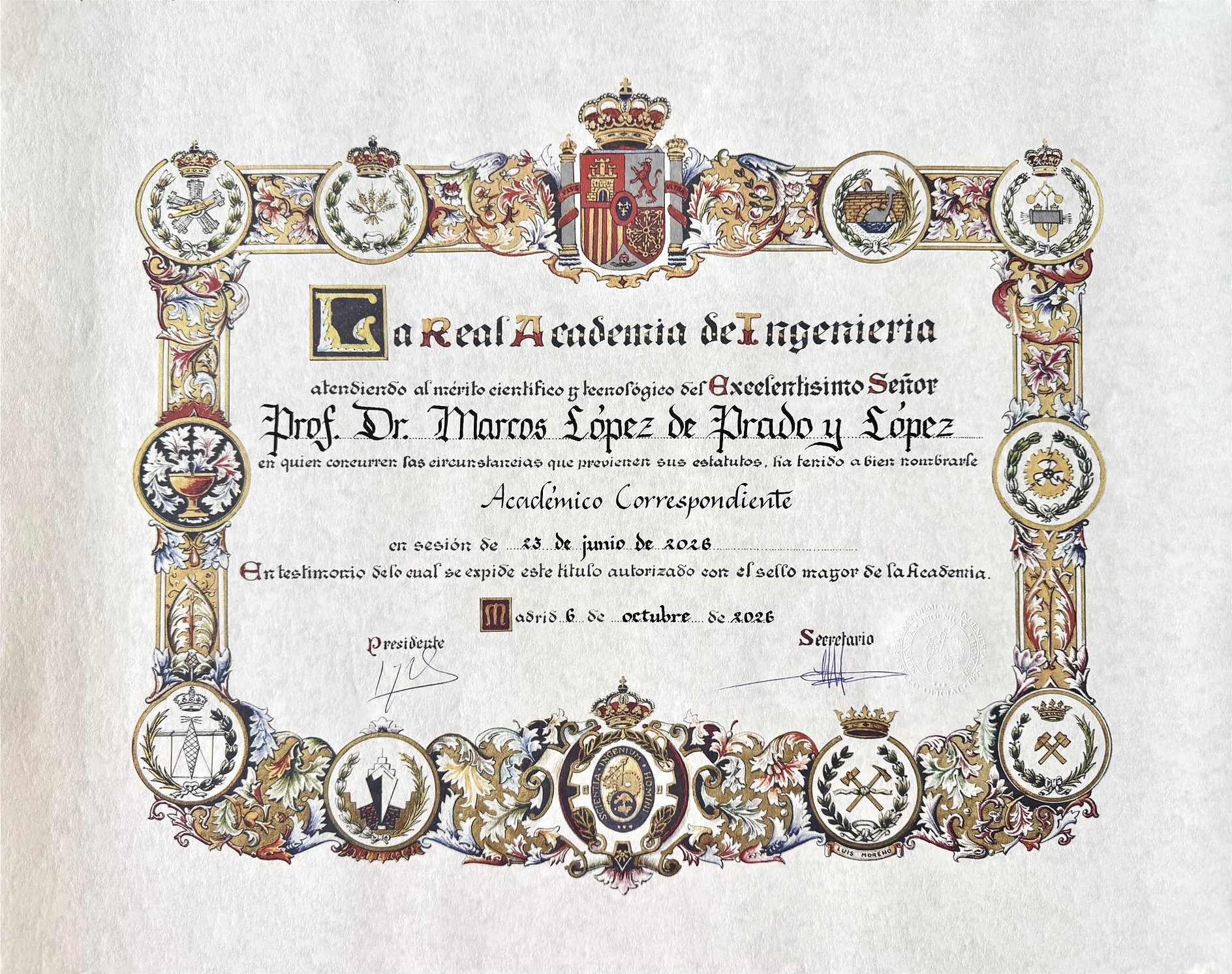
Election of an Academician
Election to a leading National Academy is one of the highest honors a scientist or engineer can receive
A national academy is a state-chartered learned society composed of a limited number of leading scholars elected by their peers in recognition of exceptional achievement. It is charged with providing independent advice to the government on science or scholarship. Its rights and obligations under public law distinguish it from learned societies established under private law.
Membership in Spain’s Royal Academy of Engineering is for life, limited in number, and not open to application. Election follows a peer-led process: candidates are nominated by Academy members, evaluated by the Admissions Board, and elected at a plenary session by an absolute majority of all members entitled to vote. Current and former international members include distinguished scientists and technologists, among them Geoffrey Hinton (Nobel Prize, Physics), Zhores Alferov (Nobel Prize, Physics), Werner Arber (Nobel Prize, Medicine), Norman Borlaug (Nobel Prize, Peace), John Hennessy (Turing Award), Judea Pearl (Turing Award), Maurice V. Wilkes (Turing Award), and around 60 members of foreign national academies.
As members of a Royal Academy integrated into the Institute of Spain, National and International members of Spain's Royal Academy of Engineering are formally addressed in Spanish as "Excelentísimo Señor" (for a man) or "Excelentísima Señora" (for a woman), abbreviated as "Excmo. Sr." and "Excma. Sra." respectively. In English, these styles of address are rendered as "His Excellency" (for a man) or "Her Excellency" (for a woman), abbreviated as "H.E."
Medal of Academician
The motto expresses the Academy’s mission: to place knowledge, creativity, and engineering expertise at the service of society
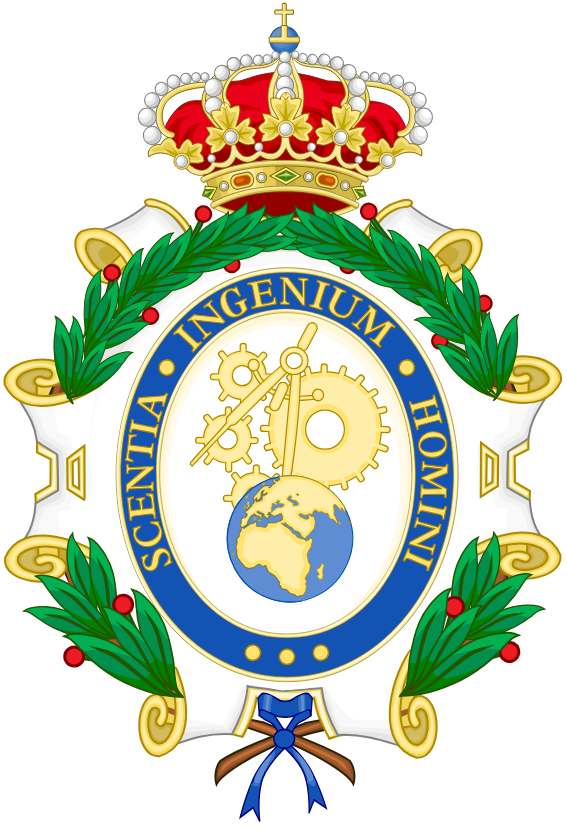
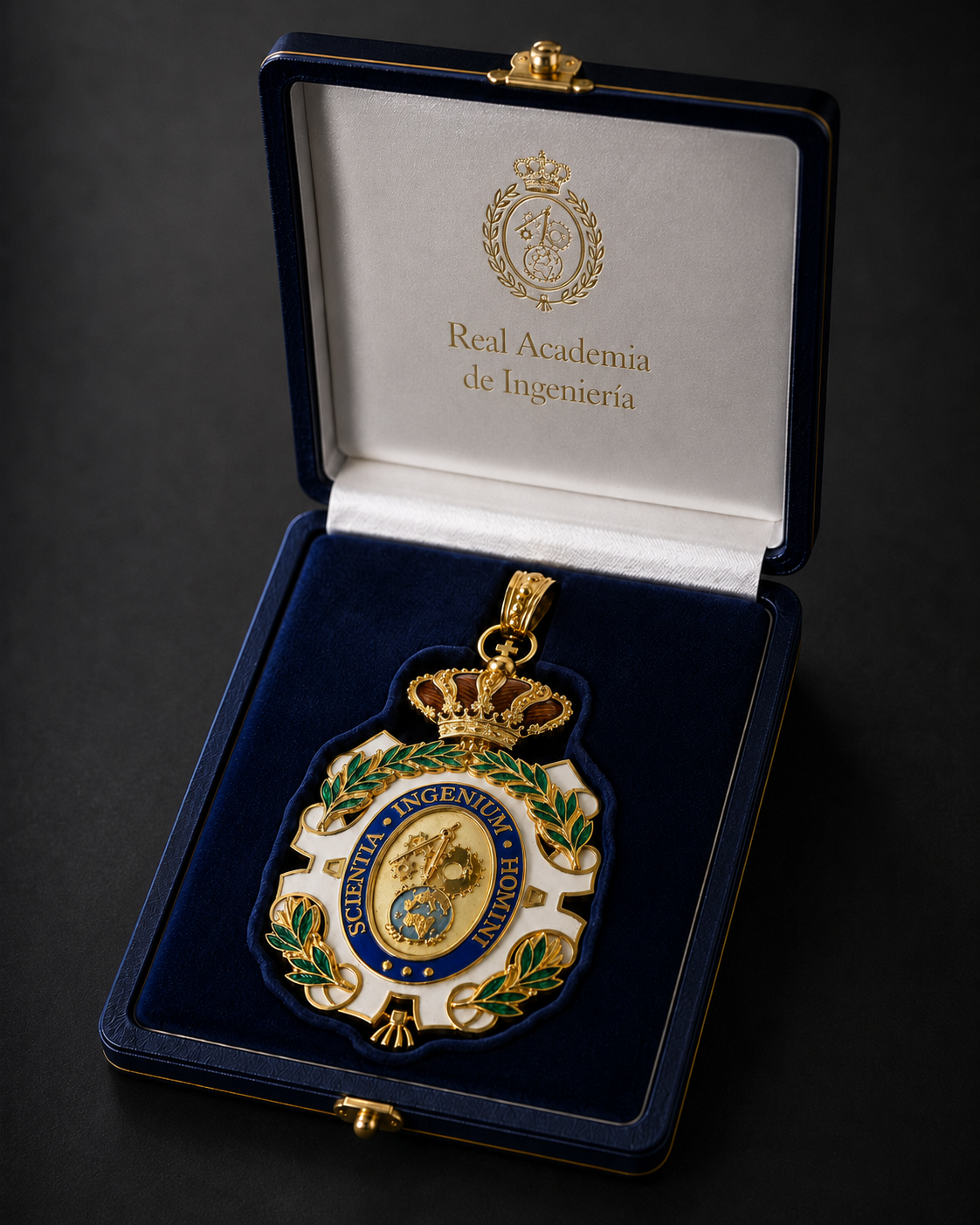
The Arms of the Royal Academy of Engineering of Spain combine royal, scientific, and engineering symbolism. They are surmounted by the Royal Crown of Spain, reflecting the Academy’s royal character and its place among Spain’s national academies. At the centre is a blue and gold oval bearing the Latin motto Scientia · Ingenium · Homini, which may be rendered as “science and ingenuity for humanity.”
Within the oval appear instruments and symbols of engineering and scientific progress: gears, a compass, and a globe. Together they evoke design, calculation, machinery, technological invention, and the global reach of engineering knowledge. The surrounding laurel branches symbolize excellence, achievement, and public service.